Like us on facebook
Follow us on twitter
review us on google

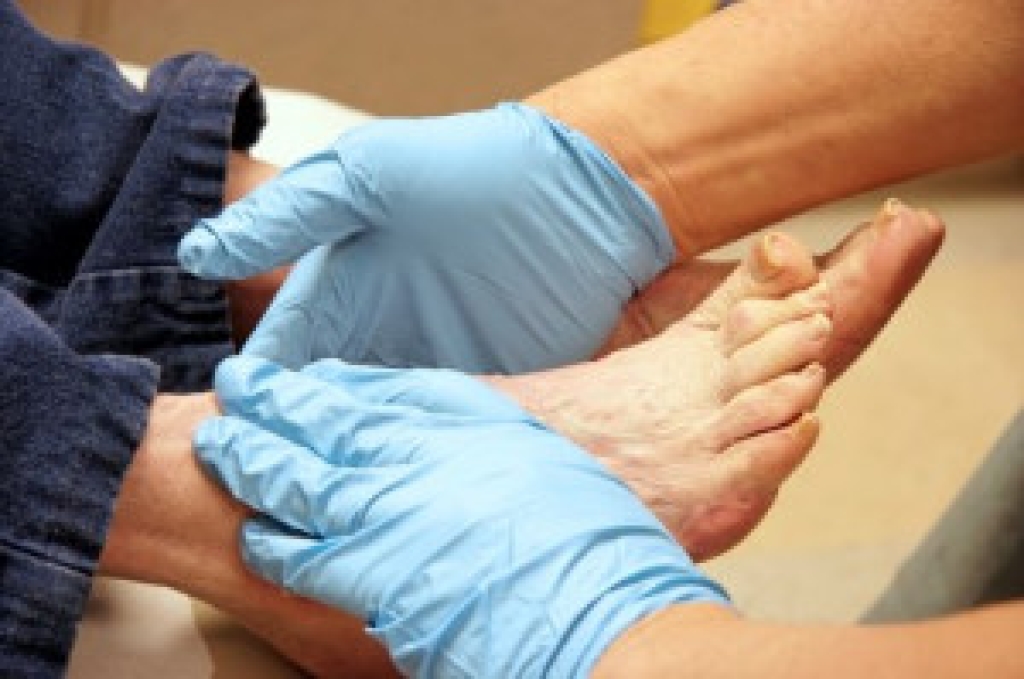
Foot Problems Caused by Diabetes

Diabetics are at extreme risk for a number of conditions that can affect the health of the lower extremities. Around 60 percent of diabetics develop a foot ulcer, brought about by peripheral nerve and vascular diseases. For that reason, a simple sore or slight wound on the feet can become a serious health threat. Loss of sensation in the feet and toes, caused by neuropathy, can make it difficult to notice a cut or sore. Constricted blood flow to the feet, caused by peripheral artery disease, can slow the healing process. If left unattended, even a tiny wound can become infected and turn into an open wound, or ulcer. As the untended ulcer continues to grow, tissue may die, and if left long enough can turn into gangrene. If the infection reaches the bone, loss of a limb then becomes a possibility. Diabetic foot ulcers are believed to be responsible for more hospital admissions than any other diabetes complication. The essentials to prevent this chain of events are a careful and regular routine of foot care and consistent regulation of insulin and blood sugar levels. Professional care from a podiatrist is suggested for any diabetic who struggles with such foot problems.  

Diabetic foot care is important in preventing foot ailments such as ulcers. If you are suffering from diabetes or have any other concerns about your feet, contact Gary Saphire, DPM from Parkway Podiatry. Our doctor can provide the care you need to keep you pain-free and on your feet.

Diabetic Foot Care

Diabetes affects millions of people every year. The condition can damage blood vessels in many parts of the body, especially the feet. Because of this, taking care of your feet is essential if you have diabetes, and having a podiatrist help monitor your foot health is highly recommended.

The Importance of Caring for Your Feet

  • Routinely inspect your feet for bruises or sores.
  • Wear socks that fit your feet comfortably.
  • Wear comfortable shoes that provide adequate support.

Patients with diabetes should have their doctor monitor their blood levels, as blood sugar levels play such a huge role in diabetic care. Monitoring these levels on a regular basis is highly advised.

It is always best to inform your healthcare professional of any concerns you may have regarding your feet, especially for diabetic patients. Early treatment and routine foot examinations are keys to maintaining proper health, especially because severe complications can arise if proper treatment is not applied.

If you have any questions, please feel free to contact our office located in Brooklyn, NY . We offer the newest diagnostic and treatment technologies for all your foot care needs.


Read more about How to Care for Diabetic Foot

Possible Reasons for Ankle Pain

The ankle is a complex joint. It is made up of bones, muscles, ligaments, and tendons. It is connected to two bones in the lower leg called the tibia and fibula at the ankle joint or talus. The tibia is the shinbone, and the fibula is the lower leg bone. Ligaments and tendons connect the talus to the heel and other foot bones. There are also blood vessels, nerves, and other tissues in the ankle area, which can be impacted by different diseases. Ankle pain is a symptom often felt by active people and athletes. However, all people may experience ankle pain. Reasons for such pain vary. It is important to understand its root cause to be treated properly. Ankle pain is unlikely to be a result of a bone fracture. Such pain can be associated with edema or leg swelling, nerve-related issues, arthritis, or a sprain, strain, or tendonitis. If you are suffering from ankle pain that does not resolve itself with rest or worsens, it is suggested that you see a podiatrist for a proper evaluation and treatment plan.

Ankle pain can have many different causes and the pain may potentially be serious. If you have ankle pain, consult with Gary Saphire, DPM from Parkway Podiatry. Our doctor will assess your condition and provide you with quality foot and ankle treatment.

Ankle pain is any condition that causes pain in the ankle. Due to the fact that the ankle consists of tendons, muscles, bones, and ligaments, ankle pain can come from a number of different conditions.

Causes

The most common causes of ankle pain include:

  • Types of arthritis (rheumatoid, osteoarthritis, and gout)
  • Ankle sprains
  • Broken ankles
  • Achilles tendinitis
  • Achilles tendon rupture
  • Stress fractures
  • Tarsal tunnel syndrome
  • Plantar fasciitis

Symptoms

Symptoms of ankle injury vary based upon the condition. Pain may include general pain and discomfort, swelling, aching, redness, bruising, burning or stabbing sensations, and/or loss of sensation.

Diagnosis

Due to the wide variety of potential causes of ankle pain, podiatrists will utilize a number of different methods to properly diagnose ankle pain. This can include asking for personal and family medical histories and of any recent injuries. Further diagnosis may include sensation tests, a physical examination, and potentially x-rays or other imaging tests.

Treatment

Just as the range of causes varies widely, so do treatments. Some more common treatments are rest, ice packs, keeping pressure off the foot, orthotics and braces, medication for inflammation and pain, and surgery.

If you have any questions please feel free to contact our office located in Brooklyn, NY . We offer the newest diagnostic tools and technology to treat your foot and ankle needs.

Read more about Ankle Pain

Get Professional Care for a Broken Foot or Ankle

Constant care and regular evaluation are important for a foot or ankle fracture. If left untreated, foot or ankle fractures can worsen over time and create more serious problems.

Don't wait to be examined if you believe you've experienced a foot or ankle fracture.

Heel Pain and Running

Running can be a good form of exercise and many enjoy this sport. However, like other physical sports, it can have negative effects on one’s feet. Heel pain is a common complaint among runners. This can be caused by overuse, plantar fasciitis, foot structure problems, or poor running form. It is critical that heel pain is treated promptly in runners to avoid further injury and complications. Plantar fasciitis is a condition where the plantar fascia, the ligament that runs from the heels to the toes on the soles of the feet, is overstretched or has slight tears. This results in heel pain, which is often worse after rest. People with flat feet or high arches represent examples of those with foot structure problems that put stress on the plantar fascia and can lead to heel pain after running. There are many other reasons heel pain may affect runners, and if this is something you suffer from, it is suggested that you see a podiatrist who can help you get to the root cause of the pain and offer effective treatment solutions.

Many people suffer from bouts of heel pain. For more information, contact Gary Saphire, DPM of Parkway Podiatry. Our doctor can provide the care you need to keep you pain-free and on your feet.

Causes of Heel Pain

Heel pain is often associated with plantar fasciitis. The plantar fascia is a band of tissues that extends along the bottom of the foot. A rip or tear in this ligament can cause inflammation of the tissue.

Achilles tendonitis is another cause of heel pain. Inflammation of the Achilles tendon will cause pain from fractures and muscle tearing. Lack of flexibility is also another symptom.

Heel spurs are another cause of pain. When the tissues of the plantar fascia undergo a great deal of stress, it can lead to ligament separation from the heel bone, causing heel spurs.

Why Might Heel Pain Occur?

  • Wearing ill-fitting shoes                
  • Wearing non-supportive shoes
  • Weight change           
  • Excessive running

Treatments

Heel pain should be treated as soon as possible for immediate results. Keeping your feet in a stress-free environment will help. If you suffer from Achilles tendonitis or plantar fasciitis, applying ice will reduce the swelling. Stretching before an exercise like running will help the muscles. Using all these tips will help make heel pain a condition of the past.

If you have any questions, please feel free to contact our office located in Brooklyn, NY . We offer the newest diagnostic and treatment technologies for all your foot care needs.

Read more about Heel Pain

Stretches for Flat Feet

Stretching the feet as part of one’s everyday foot care routine can yield significant benefits. For example, stretching the feet can improve stability, flexibility, and mobility. However, certain groups of individuals stand to benefit even more from frequently stretching the feet. Namely, individuals living with a foot condition known as flat feet may notice positive results from performing foot stretches. The reason for this is that certain stretches can strengthen the arch of the foot, resulting in a potential reduction in pain. Therefore, individuals with flat feet may consider performing towel scrunches, toe extensions, and heel raises. If you are someone looking to improve the general health of your feet through foot stretches, it is suggested that you contact a podiatrist today for advice and treatment.

Stretching the feet is a great way to prevent injuries. If you have any concerns with your feet consult with Gary Saphire, DPM from Parkway Podiatry. Our doctor will assess your condition and provide you with quality foot and ankle treatment.

Stretching the Feet

Being the backbone of the body, the feet carry your entire weight and can easily become overexerted, causing cramps and pain. As with any body part, stretching your feet can serve many benefits. From increasing flexibility to even providing some pain relief, be sure to give your feet a stretch from time to time. This is especially important for athletes or anyone performing aerobic exercises, but anyone experiencing foot pain or is on their feet constantly should also engage in this practice.

Great ways to stretch your feet:

  • Crossing one leg over the others and carefully pull your toes back. Do 10-20 repetitions and repeat the process for each foot
  • Face a wall with your arms out and hands flat against the wall. Step back with one foot and keep it flat on the floor while moving the other leg forward. Lean towards the wall until you feel a stretch. Hold for 30 seconds and perform 10 repetitions for each foot
  • Be sure not to overextend or push your limbs too hard or you could risk pulling or straining your muscle

Individuals who tend to their feet by regular stretching every day should be able to minimize foot pain and prevent new problems from arising.

If you have any questions please contact our office located in Brooklyn, NY . We offer the newest diagnostic and treatment technologies for all your foot and ankle needs.

Read more about How to Stretch Your Feet
scroll to top