Like us on facebook
Follow us on twitter
review us on google

Types of Wound Care for Gangrene

Gangrene, the consequence of compromised blood supply to the lower limbs and feet, occurs in three primary forms, which consist of dry, wet, and gas gangrene. Dry gangrene, stemming from arterial blockage, progresses slowly and necessitates vascular intervention for blood flow restoration. This type of gangrene is often seen in patients with arteriosclerosis or diabetes. Wet gangrene is caused by an infected wound that is left untreated. Wound care for gangrene involves surgical debridement to remove dead tissue and antibiotics to combat bacterial proliferation. Gas gangrene, caused by clostridia bacteria, requires aggressive debridement and targeted antibiotics to prevent systemic spread. A podiatrist plays an important role in managing gangrenous wounds in the lower limbs and feet to keep the condition from worsening. If you have ulcerated wounds that have turned gangrenous, it is strongly suggested that you seek prompt assessment by a podiatrist and get immediate treatment to avoid loss of limb. 

Wound care is an important part in dealing with diabetes. If you have diabetes and a foot wound or would like more information about wound care for diabetics, consult with Gary Saphire, DPM from Parkway Podiatry. Our doctor will assess your condition and provide you with quality foot and ankle treatment.

What Is Wound Care?

Wound care is the practice of taking proper care of a wound. This can range from the smallest to the largest of wounds. While everyone can benefit from proper wound care, it is much more important for diabetics. Diabetics often suffer from poor blood circulation which causes wounds to heal much slower than they would in a non-diabetic. 

What Is the Importance of Wound Care?

While it may not seem apparent with small ulcers on the foot, for diabetics, any size ulcer can become infected. Diabetics often also suffer from neuropathy, or nerve loss. This means they might not even feel when they have an ulcer on their foot. If the wound becomes severely infected, amputation may be necessary. Therefore, it is of the upmost importance to properly care for any and all foot wounds.

How to Care for Wounds

The best way to care for foot wounds is to prevent them. For diabetics, this means daily inspections of the feet for any signs of abnormalities or ulcers. It is also recommended to see a podiatrist several times a year for a foot inspection. If you do have an ulcer, run the wound under water to clear dirt from the wound; then apply antibiotic ointment to the wound and cover with a bandage. Bandages should be changed daily and keeping pressure off the wound is smart. It is advised to see a podiatrist, who can keep an eye on it.

If you have any questions please contact our office located in Brooklyn, NY . We offer the newest diagnostic and treatment technologies for all your foot and ankle needs.

Read more about Wound Care

Safe Removal of Corns on the Feet

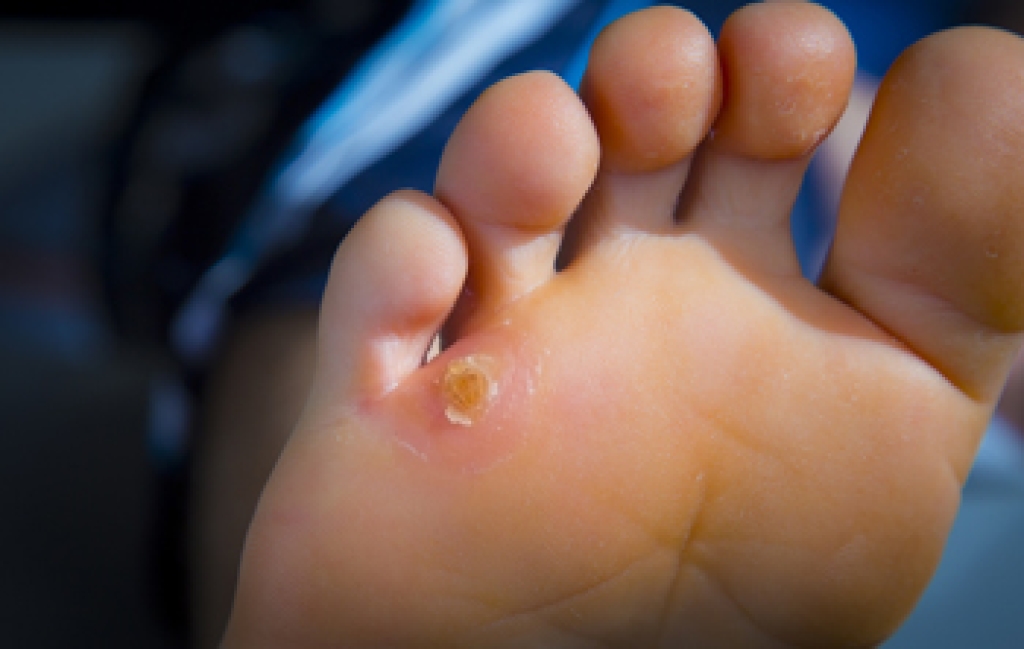
When dealing with corns on the feet, it is important to prioritize safe removal techniques, particularly if you have underlying health conditions, like diabetes. Seeking professional help from a podiatrist is essential, especially if the corns are painful or if there are concerns about infection or other complications. A podiatrist may use various methods for safe corn removal, including trimming them with a small knife or applying salicylic acid patches to soften them. These procedures are performed in a controlled medical setting to minimize the risk of infection. Additionally, the podiatrist may address underlying structural issues that can contribute to corn formation, such as bunions or hammer toes. It is important to refrain from attempting corn removal yourself, especially for individuals with diabetes or circulation problems. If you have a problem with a corn on the foot, it is suggested that you schedule an appointment with a podiatrist for its safe removal.

Corns can make walking very painful and should be treated immediately. If you have questions regarding your feet and ankles, contact Gary Saphire, DPM of Parkway Podiatry. Our doctor will treat your foot and ankle needs.

Corns: What Are They? And How Do You Get Rid of Them?
Corns are thickened areas on the skin that can become painful. They are caused by excessive pressure and friction on the skin. Corns press into the deeper layers of the skin and are usually round in shape.

Ways to Prevent Corns
There are many ways to get rid of painful corns such as:

  • Wearing properly fitting shoes that have been measured by a professional
  • Wearing shoes that are not sharply pointed or have high heels
  • Wearing only shoes that offer support

Treating Corns

Although most corns slowly disappear when the friction or pressure stops, this isn’t always the case. Consult with your podiatrist to determine the best treatment option for your case of corns.

If you have any questions, please feel free to contact our office located in Brooklyn, NY . We offer the newest diagnostic and treatment technologies for all your foot care needs.

Read more about Understanding Corns and Calluses

3 Common Causes of Foot Pain

Feet, often overlooked until they begin to ache, play an important role in living a normal life. Three common causes of foot pain include tarsal tunnel syndrome, plantar fasciitis, and metatarsal pain. Tarsal tunnel syndrome involves compression of the tibial or plantar nerves within a passageway in the foot. This type of compression causes pain along the inner ankle and sole. Plantar fasciitis is the result of inflammation of the tissue on the sole of the foot that supports the arch. It results in heel pain and stiffness, particularly after periods of rest or activity. Metatarsalgia, or pain in the ball of the foot is often caused by activities that involve running and jumping. There are other causes as well, including foot deformities and shoes that are too tight or too loose. Addressing these types of foot pain requires a tailored approach, ranging from orthotic inserts and physical therapy to lifestyle adjustments and proper footwear. For help with foot pain, it is suggested that you make an appointment with a podiatrist.

Foot Pain

Foot pain can be extremely painful and debilitating. If you have a foot pain, consult with Gary Saphire, DPM from Parkway Podiatry. Our doctor will assess your condition and provide you with quality foot and ankle treatment.

Causes

Foot pain is a very broad condition that could be caused by one or more ailments. The most common include:

  • Bunions
  • Hammertoes
  • Plantar Fasciitis
  • Bone Spurs
  • Corns
  • Tarsal Tunnel Syndrome
  • Ingrown Toenails
  • Arthritis (such as Gout, Rheumatoid, and Osteoarthritis)
  • Flat Feet
  • Injury (from stress fractures, broken toe, foot, ankle, Achilles tendon ruptures, and sprains)
  • And more

Diagnosis

To figure out the cause of foot pain, podiatrists utilize several different methods. This can range from simple visual inspections and sensation tests to X-rays and MRI scans. Prior medical history, family medical history, and any recent physical traumatic events will all be taken into consideration for a proper diagnosis.

Treatment

Treatment depends upon the cause of the foot pain. Whether it is resting, staying off the foot, or having surgery; podiatrists have a number of treatment options available for foot pain.

If you have any questions, please feel free to contact our office located in Brooklyn, NY . We offer the newest diagnostic and treatment technologies for all your foot care needs.

Read more about Foot Pain

Gout Pain Can Be Managed

Gout is a painful, inflammatory form of arthritis. Those affected will typically feel an intense stiffness in the joints of their feet, particularly in the big toe. Schedule a visit to learn about how gout can be managed and treated.

Foot Pain and Rheumatoid Arthritis

Foot pain is often one of the earliest signs of rheumatoid arthritis, or RA, an autoimmune condition affecting joints. RA can manifest in various forms in the feet, including swelling, stiffness, and tenderness. Over time, untreated RA can lead to progressive foot deformities such as bunions, hammertoes, and rheumatoid nodules. Additionally, inflammation in the joints can cause joint erosion and instability, further exacerbating foot problems. Seeking care from a podiatrist is necessary for individuals with RA, as these doctors specialize in managing foot conditions associated with arthritis. Podiatrists can provide comprehensive assessments, including gait analysis and imaging studies, to identify specific foot issues related to RA. If you suffer from RA symptoms in your feet, it is strongly suggested that you are under the care of a podiatrist who can help you maintain mobility and a better quality of life.

Because RA affects more than just your joints, including the joints in your feet and ankles, it is important to seek early diagnosis from your podiatrist if you feel like the pain in your feet might be caused by RA. For more information, contact Gary Saphire, DPM of Parkway Podiatry. Our doctor will assist you with all of your podiatric concerns.

What Is Rheumatoid Arthritis?

Rheumatoid Arthritis (RA) is an autoimmune disorder in which the body’s own immune system attacks the membranes surrounding the joints. Inflammation of the lining and eventually the destruction of the joint’s cartilage and bone occur, causing severe pain and immobility.

Rheumatoid Arthritis of the Feet

Although RA usually attacks multiple bones and joints throughout the entire body, almost 90 percent of cases result in pain in the foot or ankle area.

Symptoms

  • Swelling and pain in the feet
  • Stiffness in the feet
  • Pain on the ball or sole of feet
  • Joint shift and deformation

Diagnosis

Quick diagnosis of RA in the feet is important so that the podiatrist can treat the area effectively. Your doctor will ask you about your medical history, occupation, and lifestyle to determine the origin of the condition. Rheumatoid Factor tests help to determine if someone is affected by the disease.

If you have any questions, please feel free to contact our office located in Brooklyn, NY . We offer the newest diagnostic and treatment technologies for all your foot care needs.

Read more about Rheumatoid Arthritis in the Feet
scroll to top